Skip to content
The Human Artistry Campaign recently launched ‘Stealing Isn’t Innovation,’ a public advocacy effort targeting large technology companies over AI copyright concerns. Specifically, the campaign accuses certain AI developers of using copyrighted works without permission. In particular, it claims that some companies harvested massive volumes of protected content to train generative AI systems.
For technology companies, this campaign signals more than public criticism. Instead, it reflects growing legal exposure tied to AI Copyright Infringement Lawsuits. As a result, creators now challenge how AI models obtain and process training data. In doing so, they argue that unauthorized copying violates federal copyright law.
The campaign frames its position in economic terms. For example, it claims that unauthorized AI training harms American jobs and creative industries. Additionally, it argues that this conduct weakens U.S. leadership in innovation. Therefore, these statements aim to influence lawmakers, regulators, and courts.
Technology companies should recognize the broader strategy behind this effort. Notably, public advocacy often precedes regulatory change. Moreover, it also shapes jury perception in pending AI Copyright Infringement Lawsuits.
Stevens Law Group advises technology clients to treat this campaign as a compliance signal. Accordingly, companies should review training data practices and vendor relationships. Ultimately, early risk assessment can reduce exposure before disputes escalate.
The Legal Landscape Behind AI Copyright Infringement Lawsuits
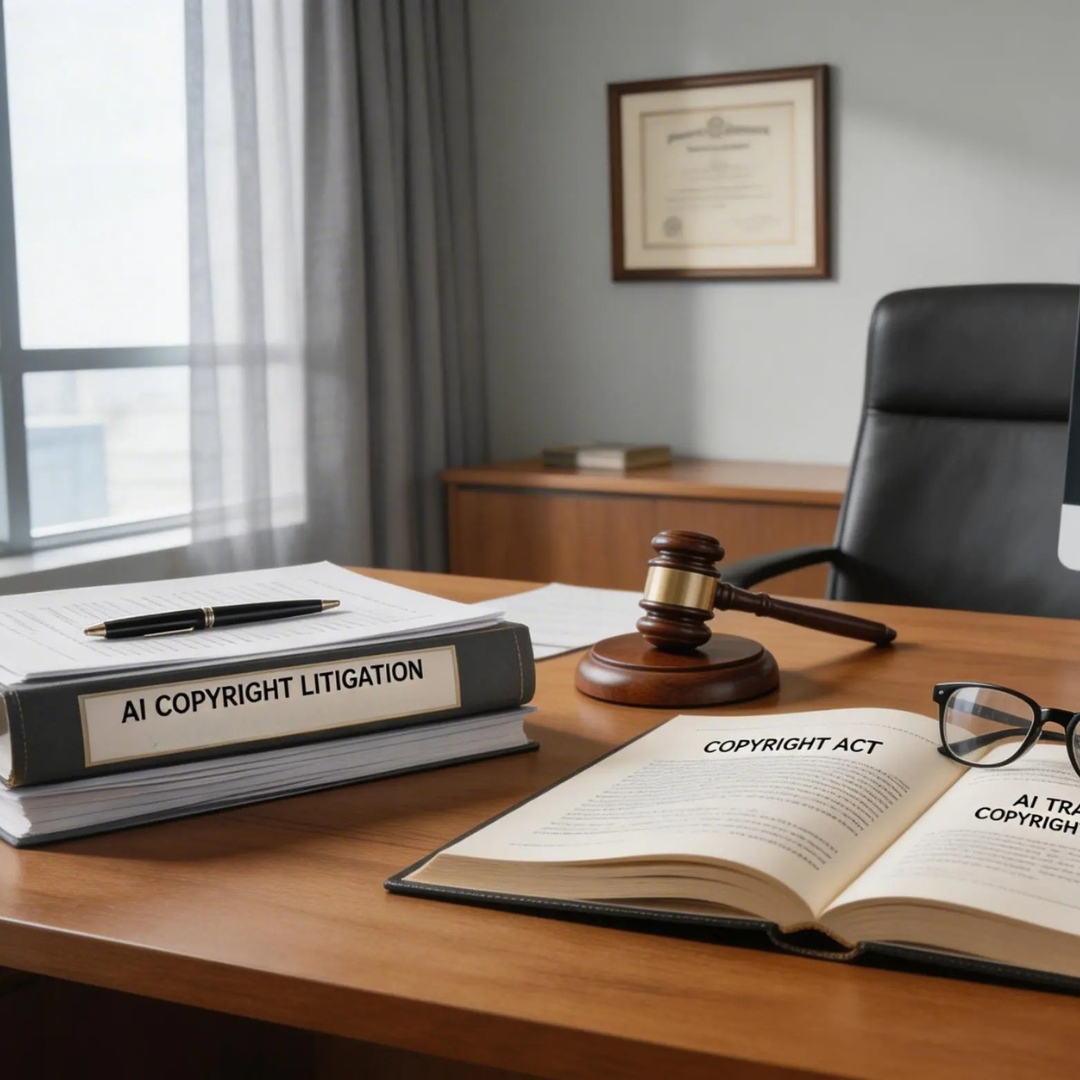
The campaign emerged amid increasing litigation against AI developers. Authors, artists, and publishers have filed class actions in federal court. These plaintiffs allege that companies copied protected works without authorization.
AI Copyright Infringement Lawsuits typically focus on two issues. Plaintiffs argue that developers reproduced copyrighted works during data ingestion. They also claim that AI outputs create derivative works.
Courts now examine whether large-scale scraping constitutes infringement. They also assess whether fair use applies to model training. These questions remain unsettled in many jurisdictions.
Technology companies face legal uncertainty as courts interpret existing statutes. Copyright law developed long before generative AI systems existed. Judges must apply traditional doctrines to new technical processes.
This uncertainty increases litigation risk. Plaintiffs often seek statutory damages, actual damages, and injunctive relief. In class actions, exposure can reach substantial figures.
Stevens Law Group helps technology clients evaluate these risks. Legal audits can identify weaknesses in data sourcing practices. A proactive strategy often costs less than defending AI Copyright Infringement Lawsuits after filing.
The Anthropic Settlement and Its Industry Impact
A major development occurred in Bartz v. Anthropic. Authors alleged that Anthropic used pirated books to train its Claude chatbot. The case concluded with a reported $1.5 billion settlement.
The court found that Anthropic downloaded books from pirate sources. These sources included Books3 and Library Genesis. Plaintiffs claimed the company used these materials without consent.
This settlement sent a strong signal across the industry. It demonstrated that AI Copyright Infringement Lawsuits can produce significant financial consequences. It also showed that courts will scrutinize data acquisition methods.
Technology companies must understand the precedent effect. Plaintiffs now cite this case in new filings. They argue that similar conduct warrants similar remedies.
The settlement also highlights reputational risk. Public perception can influence investor confidence and regulatory attention.
Stevens Law Group counsels clients to conduct internal reviews of historical data collection. Companies should document licensing agreements and data provenance. Clear documentation strengthens defenses in AI Copyright Infringement Lawsuits.
Expanding Claims – The Apple Litigation Example

Following the Anthropic settlement, authors filed another class action against Apple. In Martinez-Conde v. Apple, plaintiffs alleged mass copyright infringement. They claimed Apple used pirated books to train its AI platform.
This case illustrates how litigation spreads across the industry. Plaintiffs now target multiple developers using similar theories. AI Copyright Infringement Lawsuits no longer focus on a single company.
The Apple case emphasizes dataset sourcing. Plaintiffs allege that Books3 contained unauthorized copies of copyrighted works. They argue that using such datasets violates exclusive rights under copyright law.
Technology companies must evaluate third-party datasets carefully. Reliance on external vendors does not eliminate liability. Courts may hold companies responsible for infringing on inputs.
Legal exposure increases when companies fail to perform due diligence. Licensing verification and contractual indemnities play a critical role.
Stevens Law Group advises technology firms to implement structured compliance programs. These programs should address dataset screening, contract review, and ongoing monitoring. Such measures reduce vulnerability to AI Copyright Infringement Lawsuits.
Licensing as a Strategic Alternative
The Human Artistry Campaign emphasizes licensing as a viable solution. Specifically, it argues that some AI companies have secured content agreements. As a result, these deals demonstrate that authorized access remains possible.
From a technology company perspective, licensing offers predictability. In particular, it reduces the risk of statutory damages and injunctive relief. Additionally, it also strengthens public trust.
AI Copyright Infringement Lawsuits often allege willful misconduct. However, licensing agreements counter that narrative. In doing so, they show good-faith efforts to respect creators’ rights.
Structured licensing models can include revenue sharing or fixed fees. Furthermore, they can also define the scope and permitted uses. Therefore, clear terms limit future disputes.
Companies that adopt licensing frameworks may gain a competitive advantage. Consequently, regulators and courts may view them more favorably.
Stevens Law Group assists clients in negotiating and drafting licensing agreements. Ultimately, clear contracts protect both innovation and intellectual property rights.
Regulatory and Reputational Risk for AI Developers
Building a Defensible AI Compliance Framework
Technology companies should adopt structured compliance measures. First, internal governance must address data sourcing and documentation.
Companies should audit existing datasets. Next, they should confirm that licenses cover AI training uses. In addition, they should also maintain detailed records of consent.
Legal teams should collaborate with engineering departments. Through this approach, cross-functional coordination ensures that product development aligns with copyright obligations.
AI Copyright Infringement Lawsuits often focus on documentation gaps. In these cases, courts examine whether companies understood data origins. As a result, strong recordkeeping improves litigation posture.
Risk management should include periodic reviews. Meanwhile, as case law evolves, compliance standards may shift. Therefore, ongoing monitoring protects long-term innovation.
Stevens Law Group provides guidance on compliance audits and defense strategies. In particular, the firm represents technology companies in AI Copyright Infringement Lawsuits and related disputes.
Strategic Response to Rising AI Copyright Infringement Lawsuits and Generative AI Scrutiny
The “Stealing Isn’t Innovation” campaign signals heightened scrutiny of generative AI practices. Creators continue to file AI Copyright Infringement Lawsuits against major developers. Courts now evaluate how copyright law applies to AI training methods.
Technology companies must respond with proactive compliance strategies. Licensing, due diligence, and documentation reduce legal and financial exposure. Litigation trends show that reactive approaches carry greater risk.
Stevens Law Group advises technology companies on copyright, trademark, and intellectual property strategy. The firm helps clients defend AI Copyright Infringement Lawsuits and structure lawful innovation pathways.
For questions about these executive orders or how they may affect your business, please contact Stevens Law Group.